Buying A Key Largo Canal Home: What To Know First
May 28, 2026
May 28, 2026
Wondering if a Key Largo canal home is really as simple as house plus dock? In the Florida Keys, a waterfront purchase often comes with extra layers that can affect cost, usability, and peace of mind. If you are thinking about buying on a canal, this guide will help you focus on the details that matter most before you make an offer. Let’s dive in.
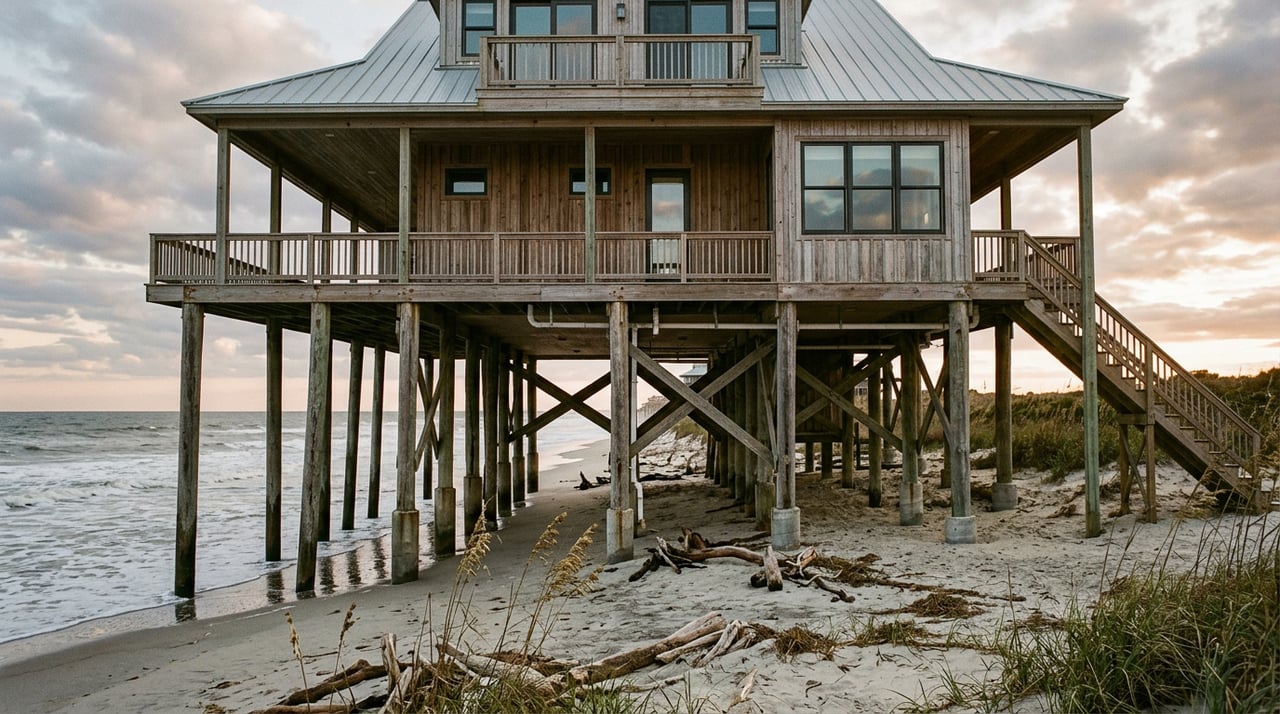
In Key Largo, flood risk is not a side note. Monroe County says all of the county is in a floodplain, with base flood elevations ranging from 8 to 17 feet above mean sea level. That means every canal-home buyer should treat flood review as a core part of due diligence, not a last-minute insurance question.
It also means you should look at the specific parcel, not just the street or neighborhood. Monroe County provides effective FEMA flood maps and a comparison tool that can show preliminary and appeal maps for unincorporated areas. Because preliminary maps are not final and may change, you want to confirm the flood picture for the exact property you are considering.
Two homes on the same canal can present different flood details on paper. Elevation, map updates, and property-specific features can all affect insurance requirements and future planning. A broad description like “waterfront in Key Largo” does not tell you enough.
FEMA identifies its Flood Map Service Center as the official public source for flood hazard maps. Flood maps are also used to help lenders determine insurance requirements. For you, the practical move is simple: ask for the current flood map information tied to the parcel before you get too far into the purchase.
Monroe County states that flood damage is not covered by homeowners insurance. FEMA also says most homeowners policies do not typically cover flood damage. So when you budget for a canal home, flood insurance should be its own line item.
Monroe County participates in the National Flood Insurance Program and its Community Rating System, which is intended to provide discounts on residential NFIP policies in unincorporated Monroe County. Even so, you should get a real insurance quote early. That gives you a more accurate picture of monthly ownership costs before you fall in love with the view.
Living in the Keys also means thinking through storm logistics in a practical way. Monroe County uses a phased evacuation system and advises residents to identify the zone where they live so they know when to leave if an evacuation is ordered. For a buyer, this is not just emergency planning. It is part of understanding how the property fits your comfort level and routine.
Before closing, verify the home’s evacuation zone and think through your likely exit route. If this will be a second home, consider what storm prep would look like if you are out of town. If this will be your primary home, think about how quickly you would want to mobilize during hurricane season.
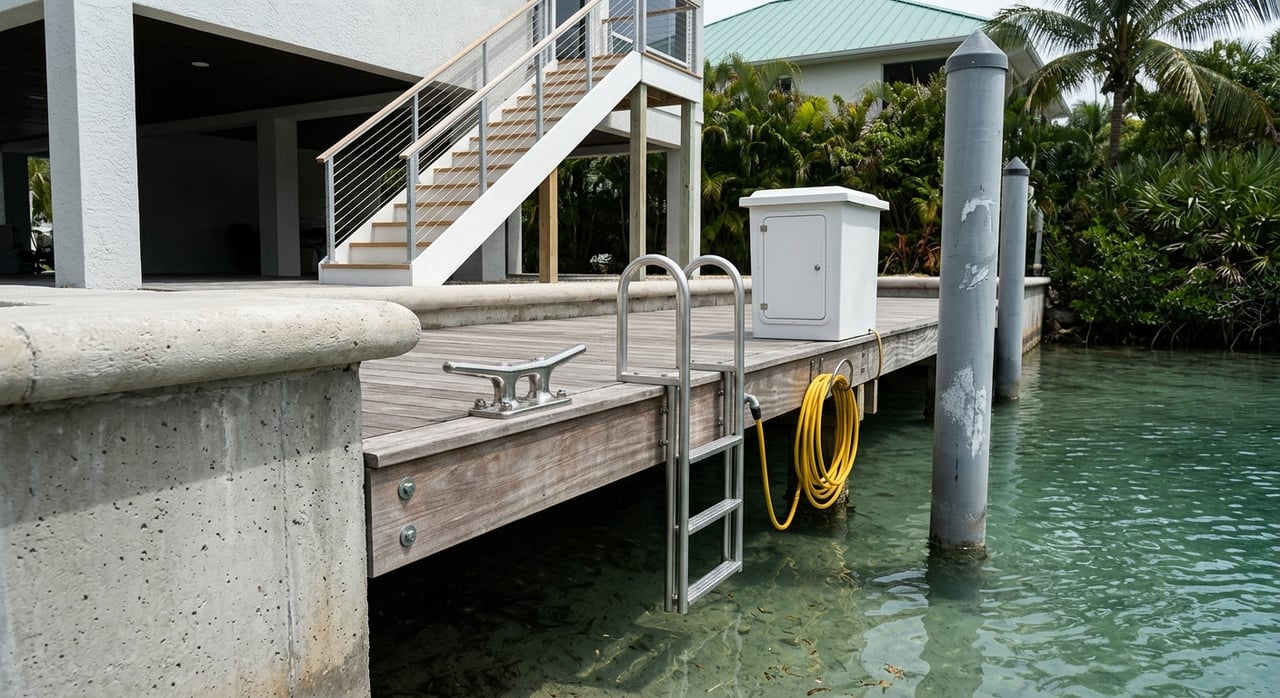
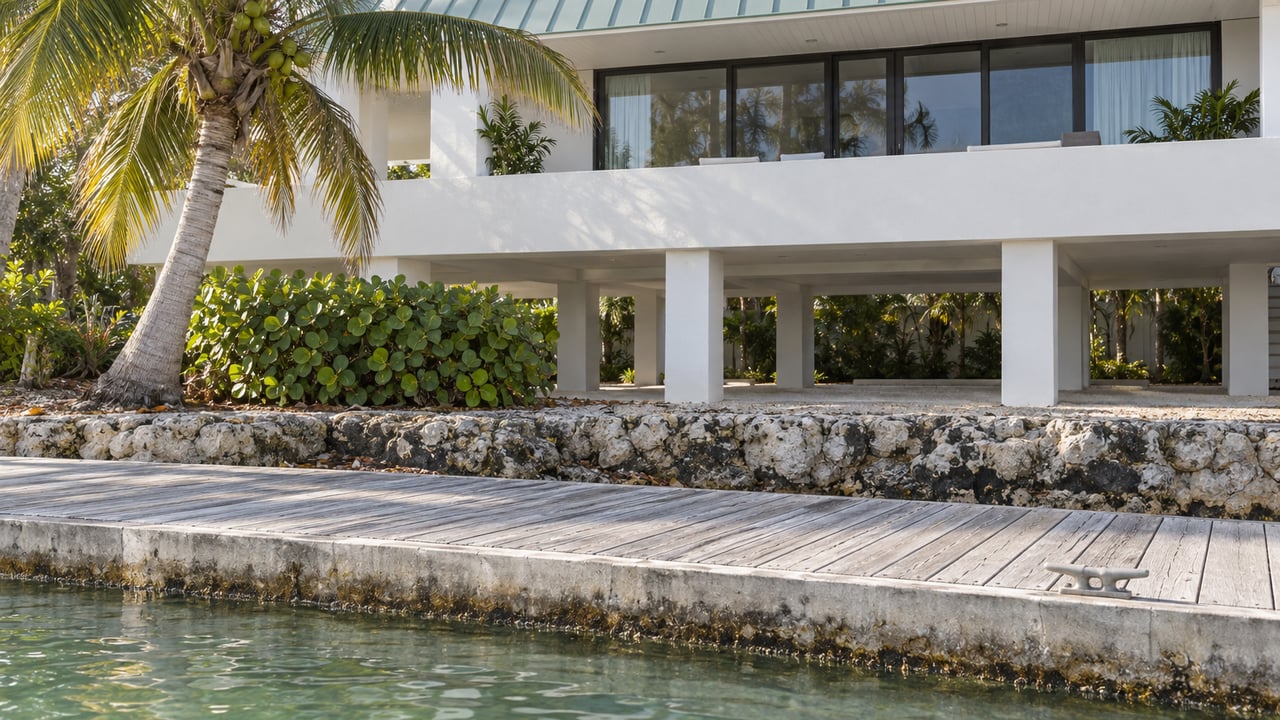
A Key Largo canal home is not just about square footage and finishes. You are also buying the shoreline relationship, water access, and any structures that make the property usable from the water. That includes the dock, seawall, riprap, boat lift, and sometimes shoreline vegetation or drainage conditions.
This is where local rules matter. The Florida Department of Environmental Protection says waterfront properties may require authorization for docks, seawalls, riprap, or other shoreline stabilization. DEP also states that an Environmental Resource Permit is required for projects in, on, or over wetlands or other surface waters.
A dock that exists is not automatically a dock that was properly approved. A seawall that looks solid today may still raise questions about permits, maintenance, or future replacement. Even lots in platted residential subdivisions may contain wetlands or other regulated surface waters, according to DEP.
That is why a canal-front purchase deserves a permit-history review, not just a quick visual check. If shoreline work was done without the right authorization, you may inherit complications that are expensive and time-consuming to sort out later.
Monroe County’s Comprehensive Plan adds another layer that buyers should know. The county supports shoreline stabilization rules and prohibits new bulkheads or seawalls on open water or unaltered shorelines. On residential canals and altered shorelines, the plan prefers native vegetation first, with riprap or sloping rock revetments allowed when vegetation will not prevent erosion.
For you as a buyer, that means future repairs or changes may not be as simple as replacing what is already there. The existing condition of the shoreline, and how it was previously improved, can affect what may be allowed going forward.
Monroe County ties dock eligibility to canal and waterway depth and width. Its plan defines continuous access as a natural passage or manmade channel that is at least 4 feet deep at mean low water and at least 20 feet wide. It also references other limits tied to canal conditions, shoreline width, and dock length.
In plain terms, a home can be waterfront without being a great fit for your boat. That is why you should look beyond listing language like “canal access” and ask how the canal actually functions for the vessel you plan to use.
A standard home inspection is important, but on a canal home it is only the beginning. Monroe County says the building process can involve planning, environmental, structural, plumbing, mechanical, electric, floodplain, and fire review. County inspections for issued permits can also include fire, flood, environmental, and planning inspections.
That should tell you something important: waterfront properties often need specialist eyes. The highest-value inspections are usually not limited to the kitchen, roof, and air conditioning. You also want to understand the waterside structures and the paper trail behind them.
Give careful attention to:
These are the features most likely to raise permit, floodplain, or environmental questions. They are also the features that can directly affect how you use the property after closing.
If the property has a powered boat lift, verify whether a separate electrical permit was needed and whether it was closed. Monroe County permit records show that boat-lift work sometimes pairs with separate electrical permits. In other words, do not assume the dock permit covered every part of the lift setup.
One of the smartest things you can do before buying a Key Largo canal home is to review public permit records. Monroe County’s system can show permits, inspections, contractors, and completion status for work including dock, boat-lift, and seawall improvements. That record can help you spot missing approvals, open permits, or work that may need more follow-up.
This step is especially valuable if the seller mentions past repairs, shoreline work, or dock upgrades. If those improvements added value to the property, you want to confirm the documentation supports them. Clean records can give you confidence, while gaps may shape negotiations or inspection strategy.
The best canal-home buyers are not just excited about the water. They are also disciplined about asking the right questions early. A strong offer starts with clarity.
What is the exact flood zone for this parcel?
Ask for the current map information for the property itself.
What will flood insurance likely cost?
Get a quote early so you can budget accurately.
What evacuation zone is the property in?
Confirm how Monroe County’s phased system applies to this address.
Are the dock, seawall, boat lift, and related electrical components fully permitted and closed?
Verify this through the county record, not just by seller memory.
What is the canal depth at mean low water?
Make sure the water access fits the boat you actually plan to use.
Was any shoreline work done near wetlands, mangroves, or filled areas?
DEP says those activities can require authorization.
Who handles maintenance or replacement responsibility for the dock or seawall?
Confirm this before closing and match it against title, disclosure, or association information if applicable.
Buying a canal home in Key Largo can be incredibly rewarding, but it calls for a sharper lens than a typical home purchase. You are evaluating the house, the shoreline, the access, and the records that support all of it. That is exactly where local insight and construction-minded review can make a real difference.
When you work with someone who understands waterfront systems, permitting patterns, and how design choices interact with island living, you can move with more confidence. You are not just buying a beautiful address. You are buying a property with moving parts, and each one deserves attention.
The bottom line is simple: treat the canal and shoreline as part of the asset itself. If you verify flood exposure, confirm the evacuation zone, review dock and seawall permits, and inspect waterside improvements carefully, you will be in a much stronger position to buy well in Key Largo.
If you are considering a canal-front purchase and want practical guidance that blends local market knowledge with design and construction insight, connect with Kelsey Caputo-Frins.
Stay up to date on the latest real estate trends.

Lifestyle
A Local Guide to the Best Pilates in Key Largo, Tavernier, Islamorada and Marathon—from Reformer and Mat Pilates to Private Sessions and Wellness Experiences Shaping t… Read more
Real Estate
Sales are up, prices are higher and nearly $2.2 billion in residential real estate has traded so far this year. Here’s what the data says—and what buyers and sellers s… Read more
Real Estate
Real Estate
A Local Buyer’s Guide to Key Largo, Tavernier, Islamorada, Marathon, Big Pine Key and the Lower Keys—Including Home Prices, Property Types, Insurance Considerations an… Read more