Living in Indian Mound, Islamorada: A Complete Neighborhood, Boating & Real Estate Guide
August 13, 2026
August 13, 2026
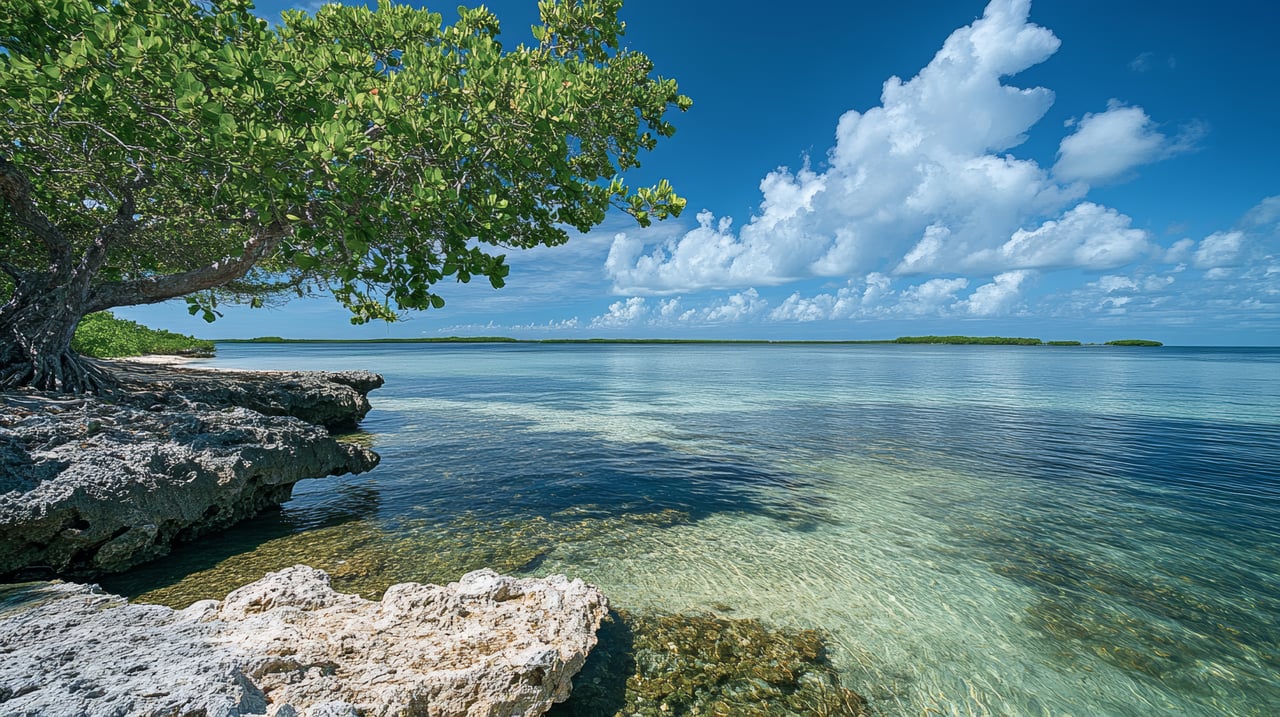
Indian Mound is one of those Florida Keys neighborhoods that can be difficult to fully understand from a real estate listing alone. Located on Plantation Key around Mile Marker 89, the community is commonly referred to locally as Indian Mound, while property records and neighborhood information may also reference Indian Harbor and Indian Waterways. It is an established residential neighborhood with a mixture of dry-lot homes, canal-front properties and some of the most substantial direct Florida Bay frontage on Plantation Key. But what makes Indian Mound particularly appealing is that it feels less like a collection of vacation homes and more like a neighborhood. This is the kind of place where you still see kids riding bikes through the streets, fishing from the homeowners park, families gathering at neighborhood events and, every so often, a weekend lemonade stand. The community's own homeowners association calendar reflects that culture, with neighborhood trick-or-treating, holiday gatherings, an Easter parade and egg hunt, and Christmas golf-cart parades among the events that have been organized here. For buyers looking for a family-oriented Islamorada neighborhood with boating access, a private bayfront park and proximity to schools and everyday conveniences, Indian Mound deserves considerably more attention than it typically receives online.
Indian Mound is located around Mile Marker 89 on Plantation Key, within Islamorada, Village of Islands. Plantation Key sits at the northern end of Islamorada between Key Largo and Windley Key, giving residents relatively convenient access to both Islamorada and Tavernier. The neighborhood is bayside of the Overseas Highway, with Indian Mound Trail running toward Florida Bay and residential streets branching through the community. This location is particularly practical for full-time residents because schools, restaurants, grocery shopping, medical services and other Upper Keys necessities are concentrated nearby rather than requiring a longer drive south into Islamorada.
Indian Mound is one of the neighborhoods I think best represents what full-time life in the Florida Keys can look like. While there are second homes throughout the community, it has a noticeable residential and family-oriented character. You see children outside, neighbors walking, people heading toward the homeowners park and families participating in neighborhood traditions throughout the year. The Indian Harbor/Indian Waterways homeowners association itself organizes and promotes community activities including trick-or-treating, holiday gatherings, an Easter parade and egg hunt, and Christmas golf-cart parades.
That community aspect is important because it differentiates Indian Mound from some Florida Keys neighborhoods where a large percentage of homes may be occupied only seasonally. Here, it is not unusual to find kids fishing from the homeowners park, riding bikes through the neighborhood or setting up a lemonade stand on the weekend. Around Halloween, the neighborhood becomes a popular destination for trick-or-treating, and golf-cart parades and holiday activities add to the small-community atmosphere around Christmas and Easter. Those characteristics are difficult to quantify on an MLS sheet, but for someone moving to the Keys with children, they can matter as much as square footage or waterfront access.
Indian Mound offers a broader range of price points than many buyers initially expect because the neighborhood contains three very different real estate categories: dry-lot homes, canal-front homes and direct bayfront properties. The difference between those categories can be several million dollars.
Dry-lot homes represent the most accessible entry point into the neighborhood. Recent sales and current property data show typical homes clustering from approximately the $750,000s into the $1.3 million range, with larger, newer or substantially renovated properties capable of exceeding that. A dry-lot home at 143 Indian Mound Trail sold for $740,000, while a newer home at 131 Indian Mound Trail sold in March 2026 for $1.1 million. The latter was built in 2018 and included access to the neighborhood's bayfront homeowners park and boat ramp, illustrating an important advantage of buying a dry-lot home here: you can own away from the water while still having neighborhood boating and bay access through the voluntary association.
Canal-front homes generally occupy the next tier of the market and can range roughly from the low-$1 millions into the $3 million-plus range, depending heavily on the home, canal location, lot, dockage and construction. A canal-front on Apache Street was offered at $1.25 million in 2026 with 32 feet of dockage on a 100-foot-wide turning basin, while 168 Indian Mound Trail has been valued around the low-$3 million range and previously sold for $3.2 million. The difference between canal properties can be significant, so buyers should evaluate water depth, canal width, dockage, seawall condition and actual boating access rather than assuming every canal-front property carries the same value.
Direct Florida Bay frontage is an entirely different segment of Indian Mound real estate. Bayfront properties along the end and outer portions of Indian Mound Trail can reach well into the $4 million to $8.5 million-plus range, depending on the size of the lot, house, views and waterfront. A bayfront home at 175 Indian Mound Trail sold for $5.38 million in 2022, while a roughly 0.59-acre bayfront vacant parcel at 189 Indian Mound Trail sold for $5.1 million in 2025 to build a new estate. Larger established bayfront residences can carry estimated values approaching or exceeding $8 million. These properties are limited in number, and much of their value comes from direct open-water frontage, lot size and unobstructed Florida Bay views rather than simply the square footage of the house.
For buyers comparing homes within Indian Mound, this is why a neighborhood-wide median can be misleading. A $900,000 dry-lot home with access to the homeowners park, a $2 million canal home with private dockage and a $6 million direct-bayfront residence technically sit within the same neighborhood but are fundamentally different real estate products.
One of the neighborhood's strongest amenities is its private bayfront homeowners park. The Indian Harbor/Indian Waterways Property Owners Association describes the park as a place where residents can access Florida Bay to swim, watch the sunset or fish from the fishing pier and dock. The park also includes the neighborhood boat ramp, making it especially valuable for homeowners who purchase a dry-lot property but still want practical access to the water.
The park gives Indian Mound something that many residential neighborhoods do not have: a shared waterfront gathering place. Rather than the community amenity being a clubhouse or pool, it is Florida Bay itself. Residents can head down to the water to fish, watch sunset or launch a boat, and the park also becomes part of the social fabric of the neighborhood. For families, this is where the neighborhood can feel particularly different from a traditional subdivision. Children can fish from the homeowners dock while parents watch the sunset, and the park creates a natural place for neighbors to see one another outside of organized events.
Indian Harbor/Indian Waterways has a voluntary homeowners association, rather than the type of mandatory HOA commonly associated with planned mainland communities. The association's stated purpose is to promote community projects, maintain neighborhood landscaping, communicate with residents and act as a liaison between the neighborhood and the Village of Islamorada. Recent property listings have shown voluntary annual association dues around $175 to $200, although current dues should always be verified directly with the association.
Access to the private homeowners park and boat ramp is controlled separately through a key system. The association currently states that a new boat-ramp and dock key costs $200, with annual renewal at $175. Keys are issued only to current homeowners who are in good standing with the association; renters must obtain access through the property owner rather than purchasing a key directly. Because fees can change, anyone purchasing specifically for boat-ramp access should confirm the current requirements with the association.
For a dry-lot homeowner, this can be one of the most valuable aspects of the neighborhood. A buyer does not necessarily need to pay the premium for canal frontage to have convenient neighborhood access to Florida Bay. Someone with a trailerable flats boat, skiff or smaller center console can potentially purchase a dry-lot property, store the boat appropriately and use the private neighborhood ramp rather than paying for waterfront property solely to gain water access.
Indian Mound sits on the Florida Bay side of Plantation Key, giving residents convenient access to the backcountry and bayside waters of the Upper Keys. Canal-front owners can keep their boats directly at their properties, while eligible dry-lot homeowners can utilize the association boat ramp. For boaters who also spend time offshore, Tavernier Creek provides a route between the bay and Atlantic sides of Plantation Key, making the neighborhood practical for owners who fish both the backcountry and offshore waters.
As with any Florida Keys waterfront purchase, buyers should evaluate the specific property rather than relying solely on the neighborhood's reputation. Canal depth, controlling depth along the route out, seawall condition, dock configuration, lift capacity, turning radius and vessel draft all matter. A canal that works perfectly for a flats boat may not be appropriate for a significantly larger offshore vessel. The buyer's actual boat should therefore be part of the property search from the beginning.
For families with school-age children, location is one of Indian Mound's strongest practical advantages. Plantation Key School, which serves students from pre-K through eighth grade, is approximately 0.5 to 0.8 mile from homes within the neighborhood, depending on the property. Coral Shores High School is also nearby, generally around 0.8 to 1 mile from Indian Mound addresses. School attendance boundaries and eligibility should always be verified directly with the Monroe County School District, but geographically, both schools are extremely close to the neighborhood.
That proximity contributes heavily to Indian Mound's family-oriented feel. In a place where many neighborhoods are dominated by second homes or vacation properties, having the primary elementary/middle school and Upper Keys public high school immediately nearby naturally makes Indian Mound appealing to families living in the Keys full time.
Indian Mound also benefits from being surrounded by everyday amenities rather than isolated from them. Nearby property data places Enrico's Pizza at roughly 0.2 to 0.6 mile, Gardenia's Bistro around 0.4 to 0.8 mile, and other restaurants and cafés within approximately a mile of the neighborhood. Grocery options and other services are also concentrated along this stretch of the Overseas Highway.
Residents are also a short drive from Islamorada dining and recreational destinations farther south. Plantation Key's location means you can head south into Islamorada for waterfront restaurants and entertainment or north toward Tavernier and Key Largo for additional shopping, healthcare and services. This is an underrated advantage for full-time living: Indian Mound feels residential once you turn off the highway, but you are not far removed from the places you use every day.
Indian Mound has developed over many decades, so there is no single architectural style. The neighborhood contains older concrete Keys homes, classic mid-century residences, renovated properties, duplexes, newer elevated construction and substantial bayfront estates. Recent property records show homes dating from the 1950s and 1960s alongside houses built in the 2000s and newer construction from the late 2010s. That variety creates opportunities at different price points but also means buyers should pay close attention to elevation, construction type, roof age, impact protection, renovations, permits and insurance rather than comparing properties based only on bedrooms and square footage.
Lots also vary considerably. Interior dry lots are often much smaller than the large direct-bayfront parcels at the western end of the neighborhood. Some bayfront properties exceed a quarter or even half acre, which is substantial by Upper Keys standards and helps explain the dramatic difference between interior and premium waterfront values.
The family appeal of Indian Mound is less about a formal list of amenities and more about how the neighborhood functions. The nearby schools are important, but so are the quieter residential streets, homeowners park, neighborhood traditions and concentration of full-time residents. It is the kind of neighborhood where children can grow up recognizing the families around them rather than seeing an entirely different group of vacationers every weekend.
The community's organized traditions reinforce that atmosphere. Trick-or-treating is a neighborhood event, while Easter and Christmas golf-cart parades create the type of traditions that children remember growing up in the Keys. The association has also hosted potlucks, holiday cookie exchanges and other community gatherings.
And then there are the smaller things that don't appear in neighborhood statistics: kids fishing at the park after school, bikes in driveways, families heading to the bay for sunset and the occasional lemonade stand on the weekend. Those details are a large part of why people who know the Upper Keys often think of Indian Mound differently from neighborhoods that may be equally attractive on paper.
It can work for either, but I think Indian Mound has particular strength as a full-time residential neighborhood. Its proximity to Plantation Key School and Coral Shores High School, access to restaurants and everyday services, community park and established neighborhood culture make it practical in ways that some more isolated waterfront communities are not. A second-home buyer can still benefit from the boating and bay access, but families relocating to Islamorada may find the neighborhood especially appealing because it provides many of the lifestyle advantages people want from the Keys without feeling exclusively like a vacation destination.
The due diligence should depend heavily on which type of property you are buying. With a canal-front property, the seawall, dock, lift, water depth and route to open water become additional priorities. With a direct-bayfront property, buyers should pay particular attention to shoreline conditions, marine improvements, exposure, elevation, flood considerations and what can legally be built or modified along the waterfront.
The age range of Indian Mound homes also makes permit research particularly important. A beautifully renovated older Keys home can be an excellent property, but buyers should understand what was renovated, when it was completed and whether major structural, electrical, plumbing, enclosure and waterfront improvements were properly permitted. Insurance quotes should also be obtained for the specific property rather than estimated from neighboring homes because construction, elevation, roof, openings and age can create substantial differences in premiums.
For buyers who want a genuine residential community rather than simply a Florida Keys address, I think Indian Mound belongs high on the list. Few Islamorada neighborhoods combine dry-lot affordability relative to waterfront property, canal-front homes, multi-million-dollar direct bayfront estates, a voluntary HOA, private homeowners boat ramp, bayfront park, fishing dock, proximity to Plantation Key School and Coral Shores High School, and an established calendar of neighborhood traditions in one community.
Its range of real estate is also unusual. A buyer may enter the neighborhood around the $750,000 to $1 million level with a dry-lot home and still have access to Florida Bay through the homeowners park, move into the $1 million to $3 million-plus range for private canal frontage, or purchase a direct bayfront property worth several million dollars without leaving the same neighborhood. That creates a mix of housing and residents that is different from a community composed exclusively of luxury waterfront estates.
Indian Mound is a good example of why understanding a Florida Keys neighborhood requires more than looking at the houses currently for sale. On paper, the attraction may be its Plantation Key location, Florida Bay access, private homeowners boat ramp and range of dry-lot, canal-front and bayfront properties. In practice, much of its appeal comes from the fact that it still feels like a neighborhood.
It is close to the schools. It is close to restaurants and everyday necessities. Boaters can access the bay without every homeowner having to own waterfront property. Canal-front owners can keep their boats behind their homes. At the western edge of the neighborhood, bayfront properties offer some of the most substantial waterfront real estate in the area. And throughout the community, the homeowners park and neighborhood traditions create places and occasions for residents to actually know one another.
For a family considering moving to Islamorada full time, those details matter. Indian Mound is the kind of place where Halloween still fills the neighborhood with kids, Christmas can mean a golf-cart parade, and an ordinary weekend might mean finding children fishing at the homeowners park or selling lemonade from the end of a driveway.
That isn't something you can calculate by price per square foot, but it is an important part of understanding what you are actually buying when you move into Indian Mound.
Stay up to date on the latest real estate trends.


Everything to Know About Home Prices, Canal and Bayfront Living, the Private Homeowners Park & Boat Ramp, Schools, Boating Access, Restaurants and Everyday Life on Pla… Read more
Everything to Know About Port Antigua Home Prices, Deep-Water Canals, the Private Bayfront Beach, HOA, Channel 5 Ocean Access, Nearby Marina Services and Life on Lower… Read more
A Complete Guide to Home Prices, Waterfront Living, Boating Access, Pirates Cove, Schools, Restaurants and Everyday Life in One of Key Largo’s Most Unique Residential … Read more
Home Prices, Bayfront & Canal Living, Boating Access, Schools, HOA Amenities and What It’s Really Like to Live in Indian Mound