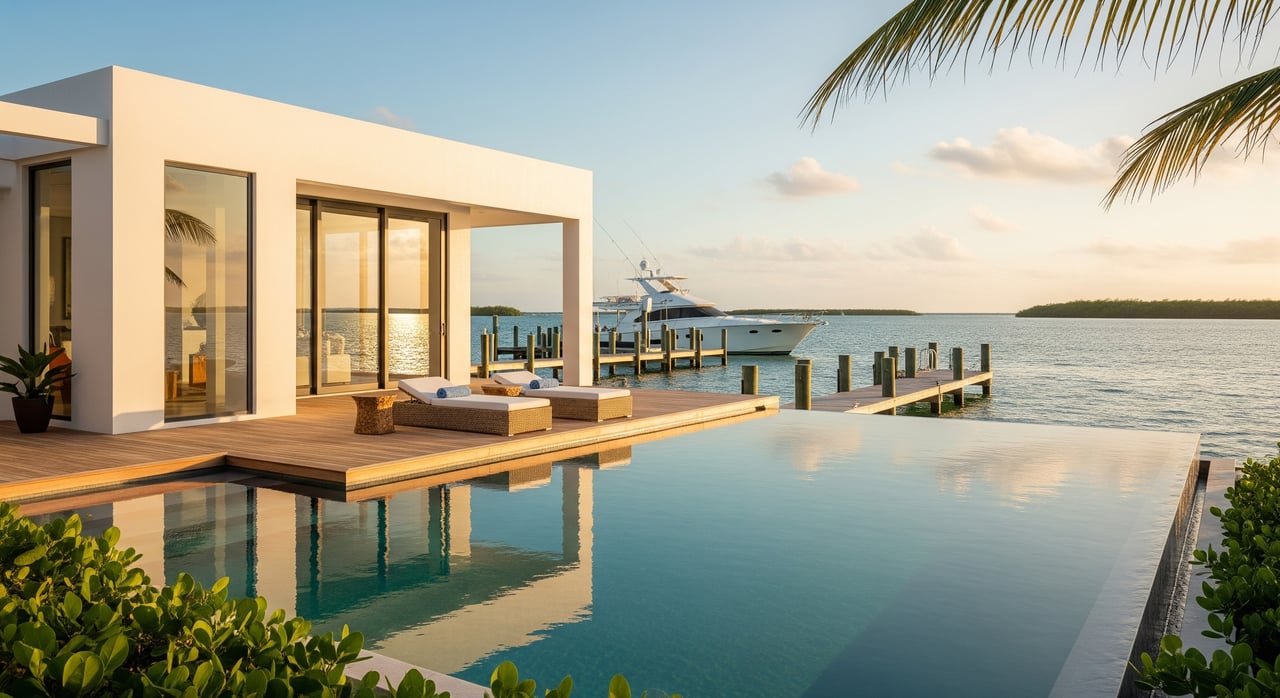
Jumbo Financing For Key Largo Waterfront Buyers
December 18, 2025
December 18, 2025
Shopping for a Key Largo waterfront home above the typical loan limits? If you are eyeing canal or ocean access, you are likely in jumbo territory, where lenders look closely at assets, insurance, and property details. With the right structure, you can keep your rate, risk, and closing timeline in balance while writing a strong offer. This guide walks you through jumbo basics, underwriting expectations, waterfront insurance, and loan choices tailored to Key Largo. Let’s dive in.
A jumbo loan is any mortgage that exceeds your area’s conforming loan limit set by the FHFA. For 2024 the baseline one‑unit limit is 726,200, and designated high‑cost areas allow up to 1,089,300. Anything above your applicable limit is non‑conforming, or jumbo. You can confirm current thresholds on the FHFA conforming loan limits page.
Jumbos are usually held by portfolio lenders or sold to private investors. That means rules can vary by bank. The upside is flexibility. The tradeoff is more documentation and higher reserve expectations.
Most jumbo lenders want solid credit and strong liquidity. Expect the following ranges:
Plan for full documentation. You will provide recent tax returns, W‑2s or K‑1s, bank and investment statements, and proof of any gift funds or trust arrangements. Because lenders keep many jumbo loans on their books, you may see different overlays by institution. Shopping multiple jumbo programs can improve pricing and terms.
If your Key Largo property is a second home, lenders treat it more favorably than an investment property, but not as favorably as a primary. To qualify as a second home, you will be expected to use the home for part of the year and not primarily as a rental. Heavy short‑term rental use can push the file into an investment classification with lower LTVs and different reserve rules.
High‑net‑worth buyers should be ready to verify liquid assets with multiple months of brokerage statements. Some private banks accept trust assets, gifts, or more bespoke structures, but documentation standards still apply. For taxes, the federal mortgage interest deduction on a second home is limited to combined acquisition debt up to 750,000 for new loans, subject to IRS rules. Review the details in IRS Publication 936 and consult your tax advisor.
Waterfront insurance is a key part of jumbo underwriting in Key Largo. Lenders will require proof of hazard, wind, and flood coverage where applicable, and insurers may have their own eligibility rules.
Start insurance quotes early. For high‑value homes, binding wind and flood can take longer and can affect both your closing costs and your maximum qualified loan amount.
Waterfront value in Key Largo depends on access, depth, seawall condition, and improvements like docks and lifts. Because each property is unique, comparable sales can be limited. That can lead to appraisal gaps, second appraisals, or extra valuation review.
Expect your lender to require a current survey that shows structures, dock lines, and flood zone data. Title and permitting should confirm that docks and seawalls were built with proper approvals and do not encroach on submerged lands. Coastal context matters too. Tools like NOAA’s viewer illustrate sea level and surge exposure for the Florida Keys. Explore scenarios with the NOAA Sea Level Rise Viewer.
This is where local expertise helps. Reviewing marine structures, elevation, and permits up front can protect value and keep underwriting on track.
Match your product to your hold period, risk tolerance, and cash flow.
In a higher‑rate environment, ARMs can help lower payment and support a stronger offer price, but you take on reset risk later. If you plan to pay points for a lower rate, calculate your break‑even timeline before you commit.
To compete for premium waterfront inventory in Key Largo, tighten both financing and due diligence.
Prepare early to reduce surprises and keep your close date.
Key Largo jumbo purchases reward clear planning. When you combine strong documentation, realistic insurance budgeting, and the right loan structure, you can bid with confidence and move smoothly to close. If you want help pressure‑testing value, reviewing docks and permits, and coordinating your offer strategy, connect with a local expert who understands both the waterfront and the numbers.
Ready to move forward on a Key Largo waterfront home? Partner with Kelsey Caputo‑Frins to align financing strategy with property due diligence and design insight. Request a Valuation & Design Consult.
Stay up to date on the latest real estate trends.



Everything to Know About Home Prices, Canal and Bayfront Living, the Private Homeowners Park & Boat Ramp, Schools, Boating Access, Restaurants and Everyday Life on Pla… Read more
Everything to Know About Port Antigua Home Prices, Deep-Water Canals, the Private Bayfront Beach, HOA, Channel 5 Ocean Access, Nearby Marina Services and Life on Lower… Read more

A Complete Guide to Home Prices, Waterfront Living, Boating Access, Pirates Cove, Schools, Restaurants and Everyday Life in One of Key Largo’s Most Unique Residential … Read more