Thinking about listing your Key Largo canal-front home but not sure where to price it? You are not alone. On the water, small differences in dockage can shift your buyer pool and your sale price in a big way. In this guide, you will see how to balance comparable sales with the real waterfront factors that matter, what to document before you list, and the simple fixes that help you capture a premium. Let’s dive in.
Why comps alone fall short
Comparable sales set the baseline, but they rarely tell the full story on the water. In the Florida Keys, constrained waterfront supply and varied dock utility mean two similar houses can sell very differently based on dock depth, lift capacity, and access to open water. Insurance, flood zones, and seawall condition also influence who will buy and what they will pay. Smart pricing in Key Largo adjusts beyond the interior and puts usable dockage at the center of value.
The comp strategy that works
Select the right comps first
- Start on the same canal, then expand to adjacent canals with similar width, depth, and access.
- Use sales from the last 6 to 12 months whenever possible to reflect current demand and rates.
- Filter by usable dockage before you match interiors. A home with deepwater dockage is not functionally comparable to one with limited or no usable depth.
- Account for structural and marine upgrades such as a rebuilt seawall, permitted dock, or higher-capacity lift.
Apply targeted adjustments
- Build a base price from the most relevant comps for structure and lot.
- Adjust for dock length, beam, depth at mean low tide, lift capacity, and time-to-open-water.
- Note permitting status. A permitted dock and lift with clear documentation reduces risk and typically supports stronger pricing.
- Document each adjustment and why it matters to your likely buyer.
Examples that move price
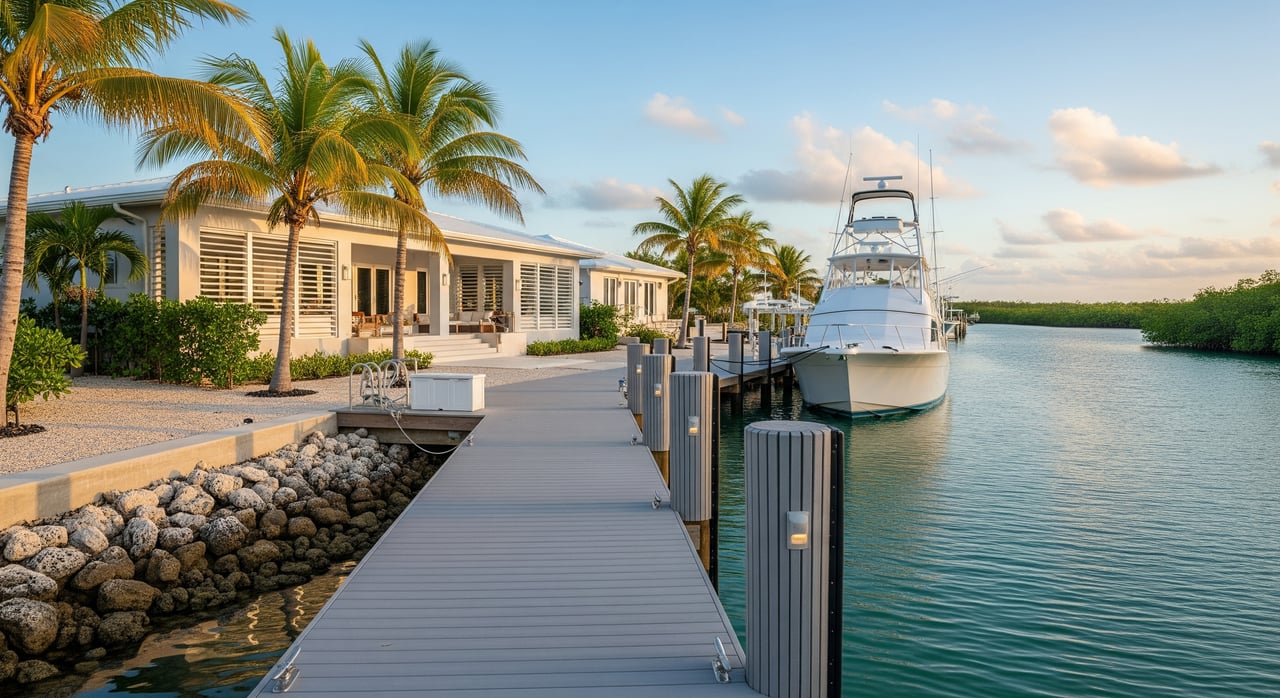
- Private, permitted deepwater dock with quick Atlantic access often commands a premium.
- Longer slip and higher lift capacity attract larger-boat owners and can expand your buyer pool.
- Unpermitted or deteriorated dock or seawall reduces price due to risk and repair costs.
- Narrow or shallow canals limit boat size and reduce buyer appetite relative to wider, deeper canals.
Dock and canal features buyers pay for
Key dockage attributes
- Slip length and usable vessel length. Maximum boat size is critical for serious boaters.
- Beam and side clearance. Wider vessels and twin-engine setups need more room to maneuver.
- Water depth at mean low tide. Shallow water limits use and boat class.
- Boatlift presence and capacity. Lift rating affects vessel type, maintenance, and peace of mind.
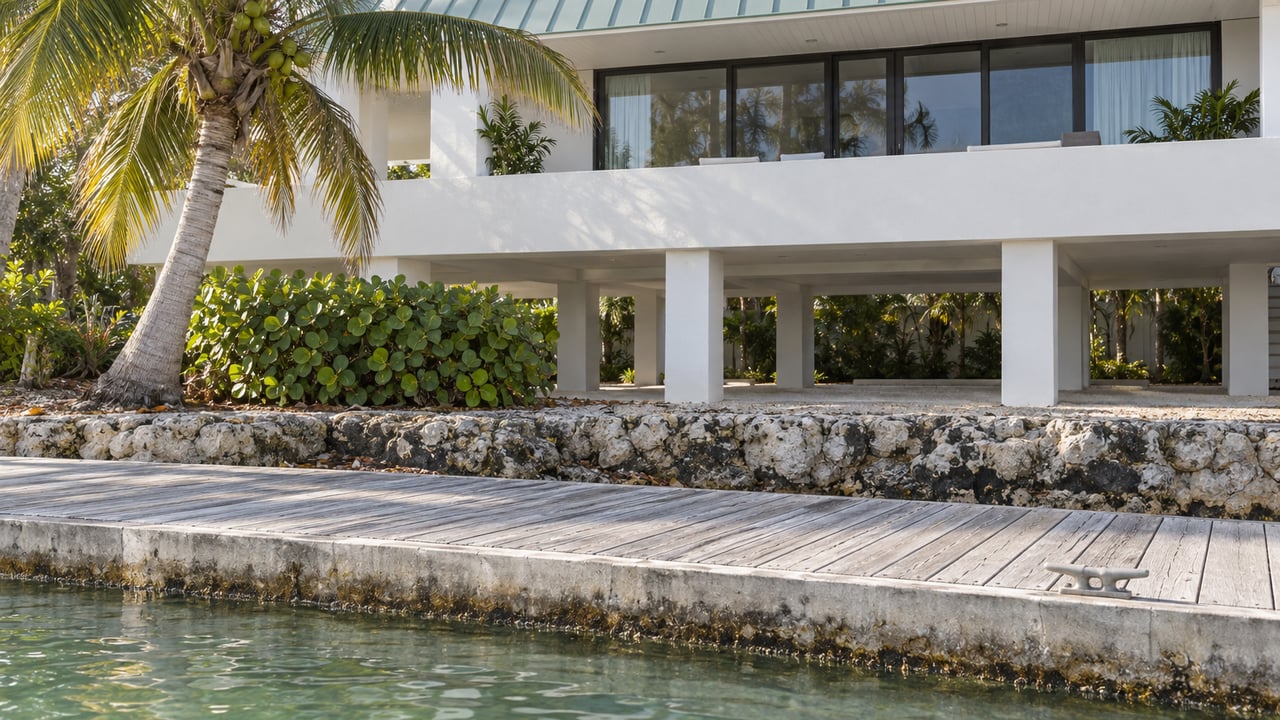
- Seawall condition and elevation. Structural integrity, materials, and code compliance matter.
- Utilities at the dock. Shore power amperage, potable water hookup, and lighting are value adds.
- Permitted status and transferability. Valid, transferable permits for docks and lifts reduce uncertainty.
- Hardware age and maintenance. Pilings, decking, and metal components should be sound.
Canal characteristics that count
- Canal width. Wider canals allow easier maneuvering and accommodate larger vessels.
- Orientation and exposure. Direct routes to the Atlantic are more desirable than long, constricted runs.
- Time-to-open-water. Fewer minutes to the ocean is a premium feature for active boaters.
- Shoaling and dredging. Canals that accumulate sediment reduce usability and can face assessments.
- Lot position. End-lots or corner locations often benefit from more frontage and easier maneuvering.
Legal and environmental constraints
- Permits are required in Monroe County for docks, seawalls, and lifts. Unpermitted work can derail a deal or force price concessions.
- Proximity to sensitive habitats can limit expansion or repairs and may require mitigation.
- FEMA flood zones and elevation certificates help buyers and insurers estimate risk and premiums.
- HOA or community rules may restrict dock size or certain activities.
Operating and carrying costs
- Ongoing dock and lift maintenance and electrical service.
- Potential dredging if your canal shoals over time.
- Insurance considerations for flood and wind, plus any marine liability.
Proving your dock’s value
Gather the right documentation
- Current permits for the dock, seawall, and lift.
- Any recent engineering or marine surveys that confirm dimensions and condition.
- Records and warranties for repairs, rebuilding, or dredging.
- Elevation certificate and flood insurance history.
- Utility specs at the dock, including shore power details.
- Photos and drone video showing canal width, turn radii, and the route to open water.
Small fixes with big returns
- Repair loose or worn decking and address safety issues at rails and electrical enclosures.
- Service the boatlift and clearly note capacity and operating status.
- Clean the dock area, remove debris and algae, and tidy fish stations and lighting.
- Post clear signage with permitted vessel length and load capacities if allowed.
Marketing and presentation tips
- Show time-to-open-water via short drone or boat video filmed at a typical tide.
- Publish verified measurements: slip length, beam, depth at mean low water, and lift capacity.
- Highlight permitted status and recent maintenance to minimize buyer uncertainty.
- If environmental limits exist, explain the steps taken or required for compliance.
Insurance, flood, and seawalls
Insurance costs and availability are a material part of buyer decision-making in the Keys. Flood zone and elevation influence premiums, and seawall condition affects both safety and future expenses. Provide your elevation certificate, shore protection details, and any recent engineering to help buyers and their insurers price risk. Clarity here reduces friction and supports stronger offers.
Seller checklist: your dockage snapshot
Use this quick list to prepare your property for pricing and showings:
- Dock type and configuration (fixed, floating, T-head, multi-slip)
- Slip length in feet and usable vessel length
- Beam and side clearance in feet at the narrowest points
- Water depth at mean low tide at the slip and along the route
- Time-to-open-water in minutes and typical route conditions
- Boatlift make, model, and capacity in pounds
- Shore power specs (amps/voltage) and water hookup
- Seawall material, condition, and any recent repairs or rebuilds
- Permit numbers and dates for dock, lift, and seawall; transferability
- Photos and video demonstrating maneuvering room and access
Pricing workflow you can expect
- Pre-listing consult and property walk-through focused on dockage and canal features. 2) Permit and documentation review to confirm status and transferability. 3) Field measurements for slip, beam, and depth at mean low tide, plus a visual seawall assessment. 4) Comp selection within your canal or the closest comparable canals, then targeted dockage adjustments. 5) Pricing strategy and launch plan with media that prove usability and highlight quick access.
Ready to list with confidence?
If you want a pricing plan that reflects both your home and your dock’s real-world utility, let’s talk. With local roots and hands-on design and construction insight, you get clear guidance, accurate positioning, and marketing that speaks to the right buyer. Start with a conversation with Kelsey Caputo-Frins.
FAQs
How do I value my dock in Key Largo?
- Start with local canal-front comps, then adjust for slip length, depth at mean low tide, lift capacity, permits, and time-to-open-water; these factors can shift price meaningfully.
Does a boatlift always raise my sale price?
- It often helps, especially with higher capacity units that serve larger boats; the exact uplift depends on recent sales and buyer demand for that vessel class.
What if my dock or seawall is unpermitted?
- Expect negotiation risk; buyers may request price reductions, require retroactive permitting, or walk if compliance is uncertain, so disclose early and clearly.
Why is time-to-open-water so important?
- Shorter, simpler routes to the Atlantic appeal to active boaters and can expand your buyer pool, supporting stronger pricing versus longer or constrained routes.
Should I repair or permit before listing?
- Focus on fixes and permits that widen your buyer pool or reduce risk; your agent can weigh costs against likely sale price based on nearby canal-front comps.