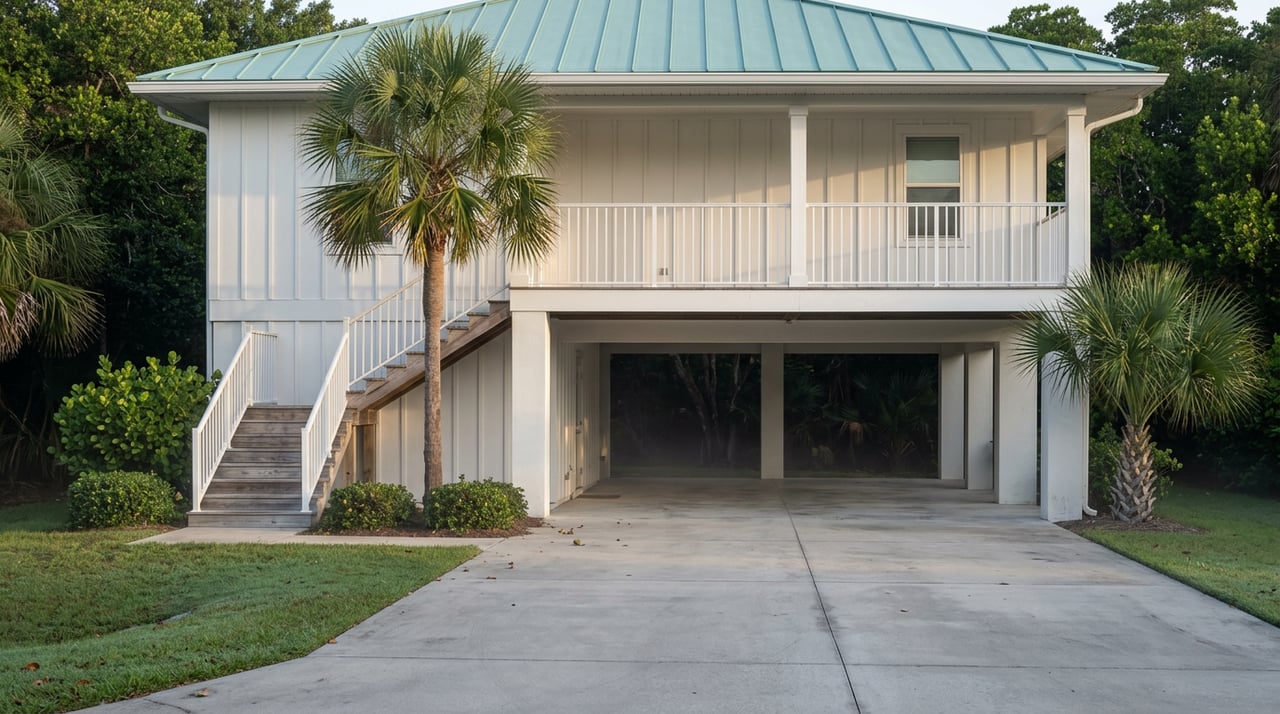
The New Ordinance That Lets Your Key Largo Neighbors Vote a Lien Onto Your House
August 27, 2026
August 27, 2026
Picture a Key Largo seller who has done everything right. The seawall was rebuilt three years ago. The elevation certificate is current. The dock permits are in order. On paper, the property is as clean as a Keys canal home gets. Then, a few weeks before closing, the title search turns up something nobody mentioned at the listing appointment: a pending assessment tied to a neighborhood vote the seller never attended, for a project the seller never asked for.
That scenario was theoretical five weeks ago. As of July 15, 2026, it is not. The Monroe County Board of County Commissioners approved a new Residential Neighborhood Improvements Program, a Municipal Service Benefit Unit ordinance that lets a majority of property owners in a defined area vote to fund their own infrastructure upgrades through special assessments rather than waiting on county-wide tax dollars. The eligible projects read like a wish list for older Key Largo subdivisions: weed gates, sidewalks, drainage improvements, recreational facilities. The mechanism behind them is what matters for anyone buying, selling, or holding a canal-front home right now.
The vote came out of the same July 14 and 15 meetings where commissioners began working through a proposed $695.8 million fiscal year 2027 budget, presented by County Administrator Christine Hurley, Assistant Administrator Tina Boan, and Management and Budget Director John Quinn. Buried inside that budget conversation was the neighborhood improvements framework, which commissioners approved unanimously after years of debate over whether countywide taxpayers should keep shouldering the cost of upgrades that only benefit specific streets or canals.
The new rule flips that. If a majority of owners in a neighborhood want a project, they can request it, and the cost gets spread only across the properties that benefit, not the whole county. Alongside it, commissioners approved a Financial Hardship Deferral Program for homesteaded owners who earn no more than 80 percent of the county median income, hold less than $60,000 in cash assets, and face an annual assessment above $1,500. Those owners can defer payment until the property sells or transfers, with the county fronting the money in the meantime.
That deferral detail is worth sitting with. It exists because the county already knows these assessments can run high enough to strain a fixed income, and it structures the debt to follow the property to its next owner rather than disappear. A deferral is not a discount. It is a lien that waits.
This ordinance was not written in a vacuum. It was finished specifically to formalize a project that has been working through Key Largo's Winston Waterways neighborhood for over a year. Winston Waterways sits along streets like Blue Heron Lane, Egret Lane, Spoonbill Lane, Cardinal Lane, Gale Place, and portions of Valencia Road, Mahogany Drive, La Paloma Road, Tamarind Road, and Michelle Drive, backed up against John Pennekamp Coral Reef State Park's mangrove wetlands. The neighborhood floods on a routine tidal schedule now, not just during storms, and the county has secured $51 million in state and federal funding to elevate the roads and install a modern stormwater system with a pump station, injection wells, and a treatment unit to replace drainage infrastructure that was never built for today's groundwater levels.
Here is the part that makes this more than a road project. Property owners in Winston Waterways get a vote, and the rule requires 51 percent support to move forward. If the vote passes, the county proceeds with construction and sets an assessment on the benefiting properties to cover any gap between the grant and the actual construction cost, collected as a capital assessment for a limited number of years. If the vote fails, the county returns the $51 million and nothing gets built. County staff has been collecting the private easements needed to even bring this to a vote, and the Residential Neighborhood Improvement Program plus the Financial Hardship Deferral Program were built specifically so this project, and others like it, would have a formal legal structure to operate inside. They got that structure on July 15.
Winston Waterways is not an isolated case. Key Largo's Twin Lakes subdivision broke ground on its own $21 million drainage and road elevation project in 2024, and Stillwright Point, another chronically flooded Key Largo neighborhood that saw 94 days of tidal flooding in a single year, has been moving through its own design phase with a $2.37 million engineering budget. The pattern is consistent: aging Key Largo neighborhoods with drainage or canal problems that predate current building codes are the ones organizing these votes, and now they have a standing legal path to do it neighborhood by neighborhood instead of waiting for a countywide bond or a state grant cycle.
Florida's homestead protection is one of the strongest in the country. It shields a primary residence from forced sale to satisfy most judgments and personal debts. But it has always carried specific carve-outs, and special assessment liens sit inside that carve-out alongside property tax liens. A homesteaded, mortgage-free Key Largo canal home offers no shield against an assessment lien once a neighborhood vote approves one. The lien attaches to the property, not to the owner's ability to claim protection, and it has to be resolved before clear title passes to a new buyer.
That is the mechanism a seller needs to understand before listing, and it is the reason this ordinance changes the due diligence conversation for buyers too. A pending or recently approved special assessment is the kind of fact that surfaces in board minutes or county correspondence long before it shows up on a listing sheet, the same way a condo special assessment often surfaces in an estoppel certificate days before closing rather than at the start of the search.
Canal-front Key Largo has a specific reason to watch this closely. Chief Resilience Officer Rhonda Haag has pointed to roughly 20 canals across Monroe County that remain plugged, closed off decades ago as a penalty for unpermitted dredging, and still generating resident complaints about water quality, seaweed buildup, and wildlife die-offs. Those are exactly the kinds of neighborhoods where residents have been asking for weed gates and drainage relief for years without a funding path. The new MSBU ordinance gives them one. If you own, or are considering buying, a home on or near one of these canals, the odds that your neighborhood organizes a vote in the next few years are higher than in a subdivision with no known water quality complaints.
A few questions belong in every Key Largo canal-home transaction from this point forward, and none of them existed as standard practice before mid-July.
Ask the county Engineering Department whether any Residential Neighborhood Improvements Program petition has been filed or discussed for the immediate area. Ask your civic association or neighborhood group directly whether a majority-vote petition has circulated, even informally. Have your title company search specifically for recorded non-ad valorem assessments tied to MSBU districts, not just standard liens and judgments. If the property sits inside or near a known project area like Winston Waterways, ask where that specific vote stands in its timeline, since the assessment terms depend on the gap between the federal grant and final construction pricing. And if an assessment is already pending or approved, put its treatment in writing in the contract, the same way a buyer would negotiate a known condo special assessment rather than assume it disappears at closing.
Does this only apply to neighborhoods with a homeowners association? No. The Residential Neighborhood Improvements Program is a county mechanism tied to a defined geographic benefit area, not a private HOA. A neighborhood with no HOA at all can still organize a petition and vote under this ordinance.
Can I be assessed if I personally voted against the project? Yes. Once a majority of property owners in the benefit area approves the assessment, it applies to every property inside that area regardless of how an individual owner voted.
Does the Financial Hardship Deferral Program cancel the debt? No. It defers payment for qualifying homesteaded owners until the property sells or transfers, with the county covering the cost in the interim. The obligation still exists and still has to be settled, typically at closing.
A canal home is still one of the best reasons to live in Key Largo, and none of this changes that. It does mean the paperwork behind a clean sale now includes a question that did not exist before July. If you are weighing a listing or watching a specific canal-front street, Kelsey Caputo-Frins can help you check where a property actually stands before an assessment vote becomes your problem instead of your neighbor's. Request a valuation and design consult and get the full picture before you sign anything.
Stay up to date on the latest real estate trends.


Lifestyle
A Local Guide to the Best Pilates in Key Largo, Tavernier, Islamorada and Marathon—from Reformer and Mat Pilates to Private Sessions and Wellness Experiences Shaping t… Read more
Real Estate
Sales are up, prices are higher and nearly $2.2 billion in residential real estate has traded so far this year. Here’s what the data says—and what buyers and sellers s… Read more
Real Estate
Real Estate
A Local Buyer’s Guide to Key Largo, Tavernier, Islamorada, Marathon, Big Pine Key and the Lower Keys—Including Home Prices, Property Types, Insurance Considerations an… Read more