What Is Actually Happening in the Florida Keys Real Estate Market? Fall 2026 Update
Real Estate Kelsey Caputo-Frins September 30, 2026
Real Estate Kelsey Caputo-Frins September 30, 2026
Depending on which headline you read, the housing market is either slowing, stabilizing, becoming more affordable or still too expensive.
The problem is that the national housing market and the Florida Keys real estate market are not the same market.
Even Florida's statewide numbers don't necessarily tell us what is happening in Key Largo, Islamorada, Marathon or Key West.
As we enter the final quarter of 2026, the Florida Keys are showing an interesting combination: more sales, higher average prices, significantly higher dollar volume and relatively stable inventory—all while mortgage rates remain around 7%.
So what is actually happening?
The short answer: the Florida Keys market has strengthened considerably in 2026, but it is also more selective than the numbers alone suggest.
Buyers are active. Capital is moving. Exceptional properties are selling. But pricing still matters, and not every segment or property is performing equally.
The year-to-date numbers tell a fairly compelling story.
According to Florida Keys MLS data comparing January 1 through September 29, 2026 with the same period in 2025:
1,498 residential properties have sold, an increase of 10%.
Closed sales volume has reached nearly $2.2 billion, approximately 25% higher than last year.
The average residential sale price has increased 14%, from approximately $1.29 million to $1.47 million.
1,462 properties have gone under contract, up 5%.
Meanwhile, active residential listings are down approximately 1%, and new listings are down 3%. Properties have sold at approximately 94% of list price on average, compared with 93% last year.
Those numbers challenge the idea that the Florida Keys are experiencing a broad real estate downturn.
More homes have sold. More homes have gone under contract. Average prices are higher. And roughly $450 million more residential real estate has changed hands than during the same period last year.
But there is another important part of the story. This is not 2021.
Buyers aren't indiscriminately purchasing whatever becomes available. Properties still need to justify their price. That distinction defines much of the 2026 market.
The strength becomes even clearer when we look at individual markets.
In Key Largo, 258 residential properties have sold through September 29, up 23% from the same period last year. Total closed volume increased approximately 40% to more than $332 million, while the average sale price rose 13% to approximately $1.29 million.
In Islamorada, closed sales increased 18% to 123 transactions. Total sales volume increased 29% to more than $253 million, while the average sale price climbed approximately 9% to $2.06 million.
Tavernier has been steadier but still positive: sales increased approximately 3%, total volume rose 8%, and the average sale price increased about 5% to $1.33 million.
Farther south, Marathon recorded 195 sales, up approximately 1%, but total dollar volume increased 10% and the average sale price increased approximately 9% to $1.36 million. Key West sales increased approximately 5%, with dollar volume up 19% and the average sale price increasing 13% to approximately $1.64 million.
So while individual neighborhoods and price brackets vary considerably, strength is not isolated to one island.
This is where the comparison becomes interesting.
Florida's statewide housing market cooled somewhat in August. Single-family closed sales were down approximately 1.4% year over year, while condo and townhouse sales declined approximately 1.8%. Statewide single-family prices increased only 1.2%. Florida Realtors
Compare that with the Keys year-to-date numbers:
Florida Keys sales: +10%
Florida Keys average sale price: +14%
Florida Keys dollar volume: +25%
The periods and metrics are not identical, so this isn't a perfect apples-to-apples comparison. But directionally, the Keys are showing substantially stronger 2026 momentum than Florida's most recent statewide snapshot.
Why?
Part of the answer is scarcity.
The Florida Keys cannot simply respond to demand by building another large master-planned community. Geography, environmental constraints, permitting and growth-management regulations place structural limits on housing supply.
And at the luxury end, scarcity becomes even more pronounced.
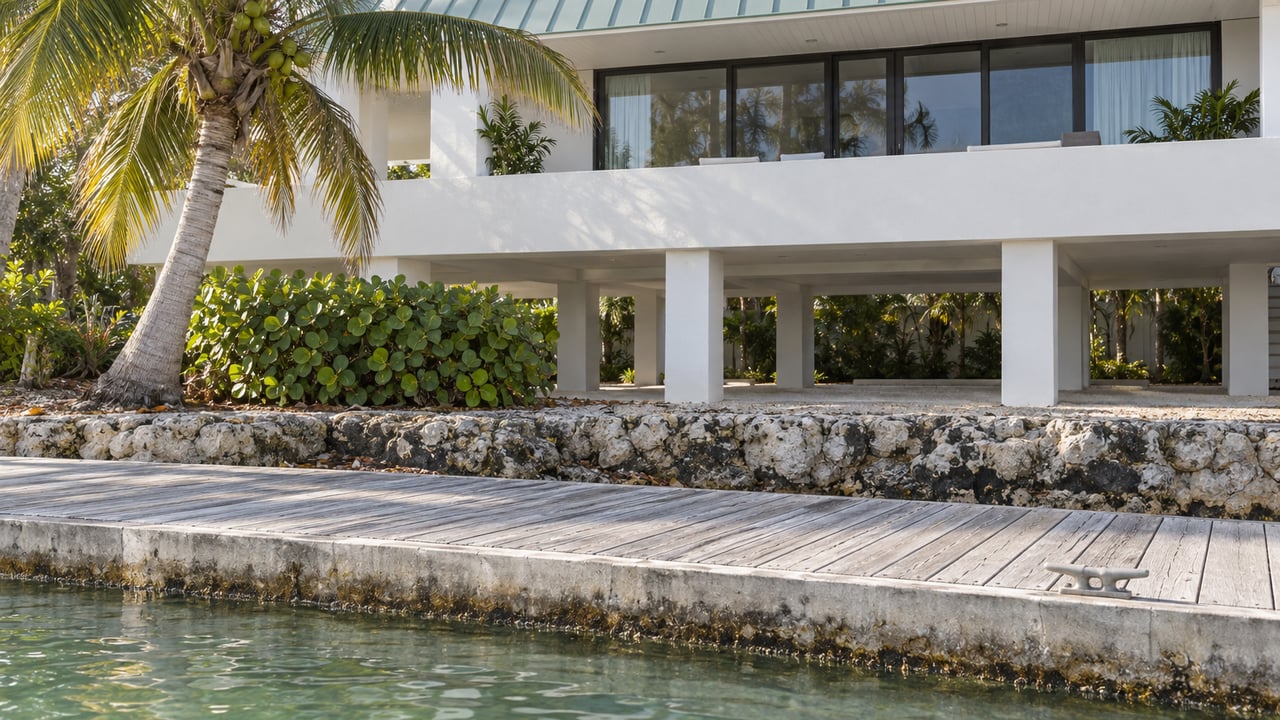
There are only so many properties with significant acreage, open-water frontage, deep-water dockage, private basins, multiple residences, legal short-term rental rights or the ability to accommodate large vessels.
When buyers compete for characteristics that cannot easily be reproduced, traditional housing-market dynamics don't always apply in the same way.
The upper end of the market has also been a meaningful driver in 2026.
An independent Florida Keys luxury-market report found that during the first quarter of 2026, luxury residential sales increased approximately 20% year over year, while the average luxury sale price increased nearly 25%. That report defines luxury as the top 10% of the Keys residential market, beginning around a $2.1 million list price for that period.
That helps explain an interesting feature in your MLS numbers:
Dollar volume is growing much faster than transaction count.
Sales are up 10%. Dollar volume is up approximately 25%. That suggests higher-value transactions are contributing disproportionately to the market's growth.
For sellers of exceptional waterfront properties, that's important context.
The luxury buyer has not disappeared.
But that buyer is increasingly discerning about what deserves a premium.
Interest rates remain one of the biggest national housing stories.
As of September 24, Freddie Mac's average 30-year fixed mortgage rate was 7.03%, up from 6.76% just two weeks earlier. Freddie Mac
The Federal Reserve's current target range for the federal funds rate is 3.75%–4.00%, while inflation remains above the Fed's long-term target. Federal Reserve
And there is an important misconception here:
The Federal Reserve does not directly set mortgage rates.
Mortgage rates are influenced by the broader bond market, inflation expectations, economic growth and other factors in addition to Fed policy. Federal Reserve Governor Michael Barr reiterated this distinction in September, noting that the Fed's short-term policy rate influences longer-term borrowing costs but is only one factor determining mortgage rates.
For buyers waiting for mortgage rates to suddenly return to 3% or 4%, there is currently little basis for building a real estate strategy around that assumption.
Florida Realtors' chief economist has similarly cautioned that affordability pressures from elevated rates are likely to remain for the foreseeable future.
This is where national housing commentary becomes less useful for the Keys.
A first-time buyer purchasing a $700,000 primary residence may be extremely rate-sensitive.
A buyer purchasing a $12 million waterfront estate may not be.
Luxury buyers may use cash, substantial down payments, private-bank financing, securities-backed liquidity or seller financing. Others may acquire with cash and decide later whether they want leverage against the property.
That doesn't make interest rates irrelevant.
It means their impact varies dramatically by price point and buyer profile.
Rates can slow activity in the middle of the market while having a much smaller effect on an ultra-high-net-worth buyer pursuing an irreplaceable waterfront asset.
Insurance remains one of the most important ownership considerations in Florida, particularly in coastal markets.
But there are some encouraging developments.
Florida regulators recently approved homeowners insurance rate reductions ranging from approximately 3.2% to 10.4% across four insurers covering more than 62,000 policies. Since January 2024, 48 insurers have filed for rate decreases and another 53 have requested no change, according to Florida's Office of Insurance Regulation data reported by Florida Realtors.
Citizens Property Insurance has also shrunk substantially—from approximately 1.4 million policies in September 2023 to roughly 255,000 as of September 18, 2026—as more policies have moved into the private market.
That does not mean insurance has suddenly become inexpensive in the Florida Keys.
Property-specific premiums can vary dramatically based on location, elevation, construction, roof, wind mitigation, flood exposure, replacement cost and coverage.
But directionally, stabilization in Florida's insurance market would be constructive for real estate if it continues.
The Keys aren't simply a residential housing market. Tourism affects second homes, vacation rentals, hospitality investments and buyer exposure to the islands.
Recent tourism numbers have been strong.
The Florida Keys tourism authority reported Keys-wide hotel occupancy of 80.4%, up 6% year over year, with average daily rates up 3.3% and revenue per available room up 9.5%.
Islamorada was particularly strong, with occupancy up 10.6% and RevPAR up 19%. The Upper Keys overall posted an 11% increase in RevPAR.
That doesn't directly translate into residential price appreciation.
But for a market heavily influenced by tourism, second-home ownership and vacation-rental demand, it is another useful indicator of economic activity.
I think this question oversimplifies what is happening.
The Florida Keys in 2026 are better described as a selective market.
Buyers have enough inventory and information to be disciplined.
Sellers of ordinary or aggressively priced properties cannot assume that rising average prices will carry their listing.
But sellers of genuinely differentiated properties may have more leverage than broad inventory numbers suggest.
A turnkey waterfront home with excellent boating access occupies a different market from a dated non-waterfront home.
A seven-day rental property has a different buyer pool from a 28-day rental property.
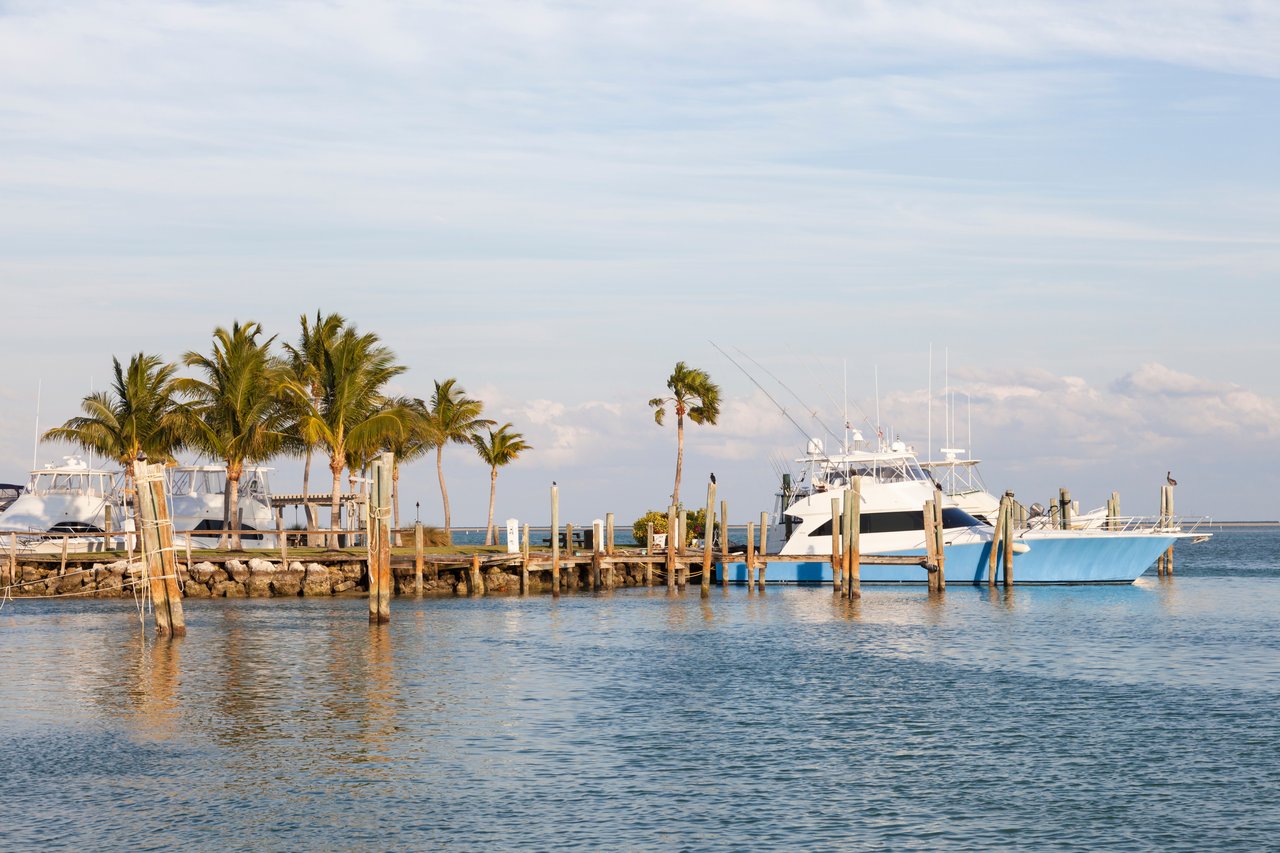
A deep-water estate capable of accommodating a substantial yacht competes differently from a home behind a restrictive fixed bridge.
And a $15 million legacy compound doesn't necessarily compete with every other $15 million listing.
Micro-market matters more than the headline.
There are several variables I would watch closely through December.
Mortgage rates remain important. A meaningful move lower could bring additional financed buyers back into the market, while sustained rates around 7% would continue to constrain affordability in rate-sensitive segments.
Inventory may be even more important locally. Florida Keys active listings are already slightly below last year's level. If winter buyer demand increases without a corresponding increase in desirable inventory, certain segments could tighten further.
Insurance deserves continued attention. Additional rate stabilization or greater private-market competition would be constructive, particularly for primary and mid-market buyers.
The broader economy and financial markets matter disproportionately to luxury real estate. Wealth creation, equity-market performance, business liquidity and consumer confidence can influence discretionary second-home purchases.
And finally, new winter inventory will tell us a great deal. October through January will show whether sellers who have been waiting decide to enter the market—and whether buyer demand is strong enough to absorb those listings.
I would not expect the Keys to suddenly become dramatically cheaper simply because mortgage rates remain elevated.
The 2026 data so far doesn't support that thesis.
But buyers should remain selective.
Properties with significant days on market, deferred maintenance, weak boating characteristics or pricing disconnected from recent sales may create negotiating opportunities.
The strongest assets may behave differently.
For an irreplaceable waterfront property, waiting for the broader market to provide a 10% or 20% discount can mean losing an asset that doesn't have a direct substitute.
The better strategy is to evaluate the individual property, not simply the market headline.
The same principle applies.
A 14% increase in the Keys-wide average sale price does not mean every homeowner should raise their asking price 14%.
Average prices are affected by the mix of properties that sell, particularly when luxury activity is strong.
Sellers should look at their immediate competition, recent comparable sales, buyer feedback and the characteristics that make their property different.
The market is rewarding good real estate.
It is not necessarily rewarding unrealistic pricing.
And as we move into winter, presentation becomes increasingly important. Sellers have an opportunity to reach seasonal residents and buyers visiting from major feeder markets—but those buyers will also be seeing competing inventory.
So, what is actually happening in Florida Keys real estate right now?
The market is stronger than many national housing headlines would suggest—but considerably more selective than the pandemic-era market.
Through September 29, sales are up 10%, dollar volume is up approximately 25%, the average sale price is up 14%, and pending activity is up 5%.
At the same time, mortgage rates remain around 7%, buyers have become more analytical, and properties that don't justify their price can sit.
For the remainder of 2026, I would watch inventory, interest rates, insurance conditions and the strength of winter demand more closely than any single national housing headline.
Because in the Florida Keys, the most important question isn't simply whether the market is going up or down.
It's what is happening in the specific market—and with the specific property—you are considering.
Kelsey Caputo-Frins is a Florida Keys real estate advisor with Berkshire Hathaway HomeServices Keys Real Estate, specializing in luxury waterfront residences, investment properties and redevelopment opportunities throughout the Florida Keys. A fourth-generation Florida Keys resident with a background in architecture, construction and interior design, Kelsey brings a property-focused perspective to evaluating Florida Keys real estate, from market positioning and investment potential to construction, waterfront functionality and long-term value.
Florida Keys MLS statistics compare January 1–September 29, 2026 with the same period in 2025. Information is deemed reliable but is not guaranteed. Market conditions vary by location, price range and property type. This article is for general informational purposes and should not be considered financial, insurance, tax or investment advice.
Stay up to date on the latest real estate trends.

Lifestyle
A Local Guide to the Best Pilates in Key Largo, Tavernier, Islamorada and Marathon—from Reformer and Mat Pilates to Private Sessions and Wellness Experiences Shaping t… Read more
Real Estate
Sales are up, prices are higher and nearly $2.2 billion in residential real estate has traded so far this year. Here’s what the data says—and what buyers and sellers s… Read more
Real Estate
Real Estate
A Local Buyer’s Guide to Key Largo, Tavernier, Islamorada, Marathon, Big Pine Key and the Lower Keys—Including Home Prices, Property Types, Insurance Considerations an… Read more